The Wuthering Heights of Edna Clarke Hall
Bài mới nhất trên số mới nhất về Đỉnh Gió Hú trên tờ Paris Review.
The Wuthering Heights of Edna Clarke Hall by Sarah Hyde
The Wuthering Heights of Edna Clarke Hall
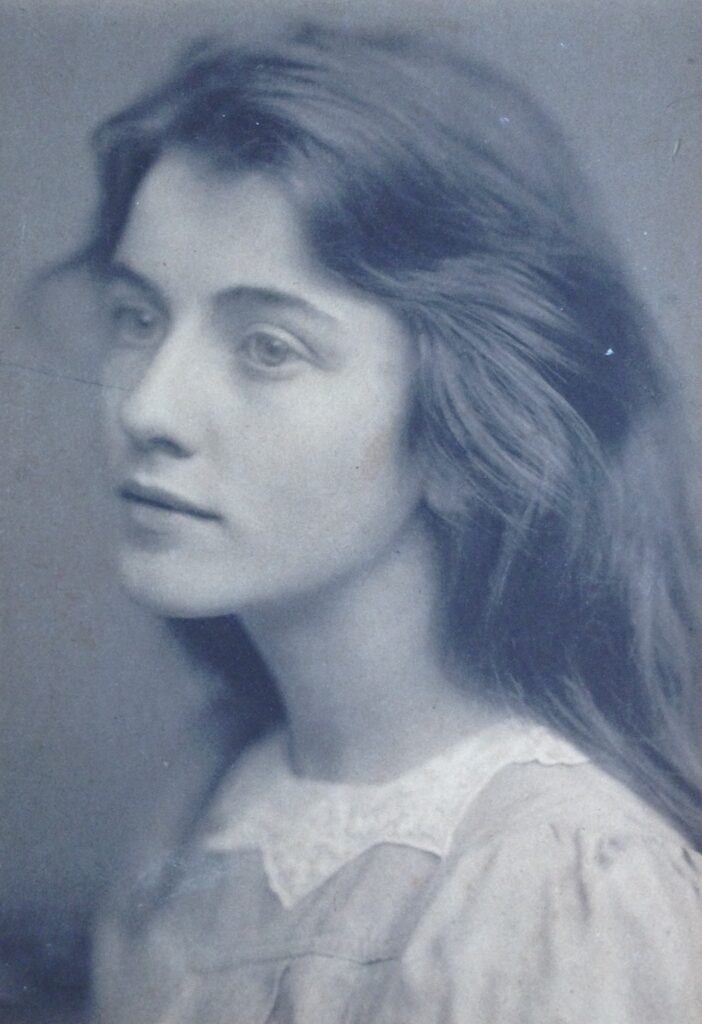
Edna Clarke Hall, aged sixteen, ca. 1895. Photograph courtesy of Abbott and Holder Ltd.
The artwork of Edna Clarke Hall was born out of a kind of fixation more often associated with outsider artists, but Hall herself began as something of an insider. Accepted to London’s prestigious Slade School of Fine Art at just fourteen years old, she studied under the painter Philip Wilson Steer and became the favorite student of the school’s director, the renowned drawing instructor Henry Tonks. Many of her peers would go on to be celebrated artists—the stage designer Albert Rutherston, the painter Arthur Ambrose McEvoy, the sibling portraitists Gwen and Augustus John—and Hall seemed destined for similar success. But her fortunes changed six years later, with her marriage to William Clarke Hall, a lawyer thirteen years her senior with an affinity for young girls. (The poet Ernest Dowson once described him as a “devout follower of the most excellent cult of La Fillette.”)
Hall’s husband had been a friend of her father, the reverend Benjamin Waugh, a well-known campaigner who founded the organization that later became the National Society for the Prevention of Cruelty to Children. William had also dedicated his legal career to children’s advocacy, focusing in particular on legislation to preserve the purity of young girls, like a bill raising the age of consent to twenty-one. (Though he also advocated prosecuting underage girls for their own abuse at the hands of older men. “Girls under 16 years of age,” he wrote in his book The Law Relating to Children, “are frequently of the most depraved character, and often at least equally guilty with the boys and men who yield to their solicitations.”) This vocation did not, however, dissuade him from proposing to Hall, a sixteen-year-old whom he’d known since she’d turned thirteen.
William’s “Lewis Carroll-like inclinations,” as the historian Max Browne terms them, made it “almost impossible to accept the girl he fell in love with as a woman.” His affection for Hall waned shortly after their wedding. “In the first months of marriage,” she confessed in her unpublished autobiography “The Heritage of Ages,” “I was left standing like a confused child by an unkindness I could not interpret.” Though William had initially supported Hall’s artistic ambitions, he began to discourage her artistic practice in favor of more traditional housewife pastimes. Holed up in their mansion, Great Tomkyns, in Essex, she felt “deserted,” isolated and adrift without her art. It was around this time that she first began to sketch scenes from Wuthering Heights, the book on which she would ruminate for the next three decades of her life.
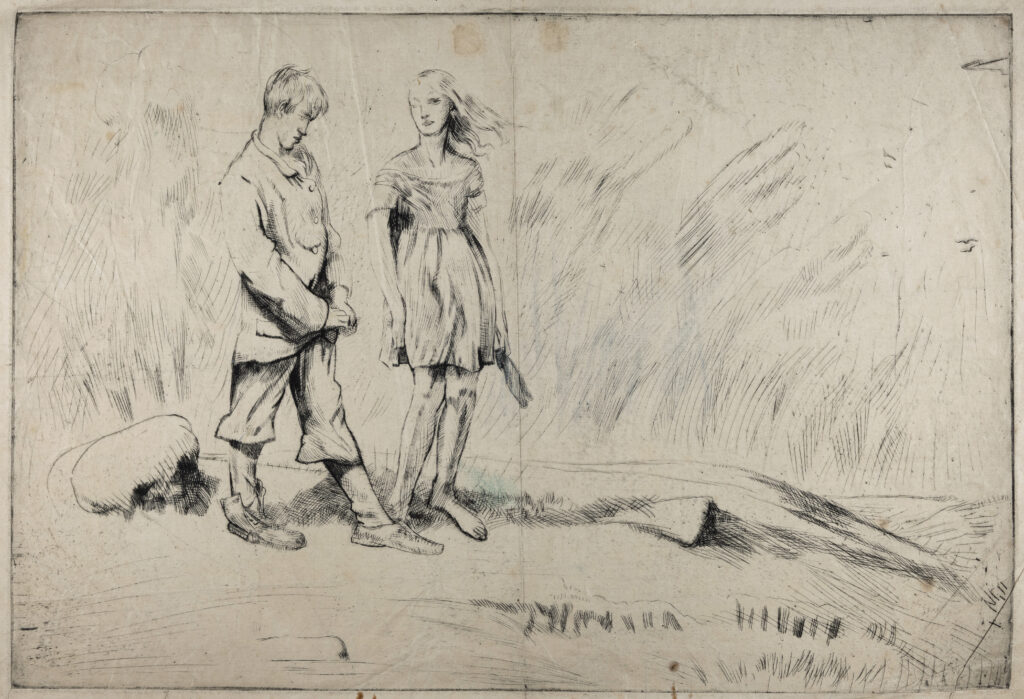
Edna Clarke Hall (1879–1979), Untitled, ca. 1920s, etching. Collection of Richard Clarke Hall, © the Estate of Edna Clarke Hall; photograph courtesy of Richard Clarke Hall/Abbott and Holder Ltd.
Edna Clarke Hall was certainly not the first or last sensitive bourgeois girl to be creatively consumed by Emily Brontë’s vision of the North. The author’s fictional Gimmerton, with its heavy Northern vernacular, was quite far indeed from sunny Edwardian Essex, with its polite croquet and cucumber sandwiches. “It held me in its grip as no other book ever had,” Hall wrote. “Was it the long lonely days at home, the isolation of the house in the wider setting of the landscape, the beams of Great Tomkyns which I still felt in my bones and which so reminded me of this book?” But it was the relationship between Cathy and Heathcliff that especially obsessed her. At times, Hall would dress up as the characters so as to model their clothes for her sketches. “I lived the characters of Heathcliff and Catherine myself, I simply was them,” she explained. “It was something that had come to pass in a deeply unconscious way. I just had to draw Wuthering Heights.”
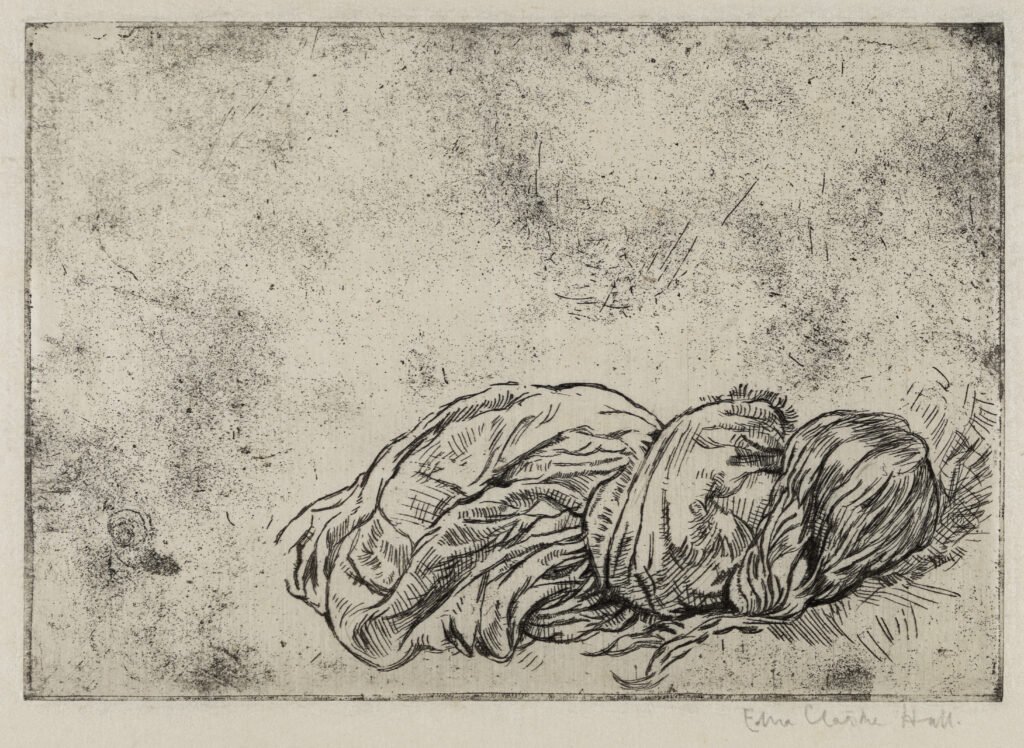
Edna Clarke Hall (1879–1979), Untitled, ca. 1920s, etching. Collection of Richard Clarke Hall, © the Estate of Edna Clarke Hall; photograph courtesy of Richard Clarke Hall/Abbott and Holder Ltd.
Imagining the story awoke something in the long-inactive artist. Brontë’s novel served as both an escape from and a reflection of her own unhappy marriage. (Unsurprisingly, there are no drawings dated after her husband’s death in 1932.) In “Heritage of Ages,” Hall described feeling almost possessed by the need to draw its characters. “I drew them all one evening, I was quite alone, Willie was away. I could not stop,” she wrote. She produced the same compositions in many different styles. “I had such a strong feeling for it, I seemed to work under a spell. I did one after the other, scattering the sketches about like a maniac … My obsession with Wuthering Heights was so persistent that for years these drawings used to slide out of my mind with complete ease.”
Hall’s devotion to rendering the tortured lovers yielded hundreds of drawings, prints, and watercolors, many of which have been lost or squirreled away in private collections. A selection of her works spent the past decades mostly unnoticed in the collections of the Victoria and Albert Museum in London and the Ashmolean in Oxford—until this spring, when a new illustrated edition of the novel united thirty of Hall’s sketches with the text for the first time.
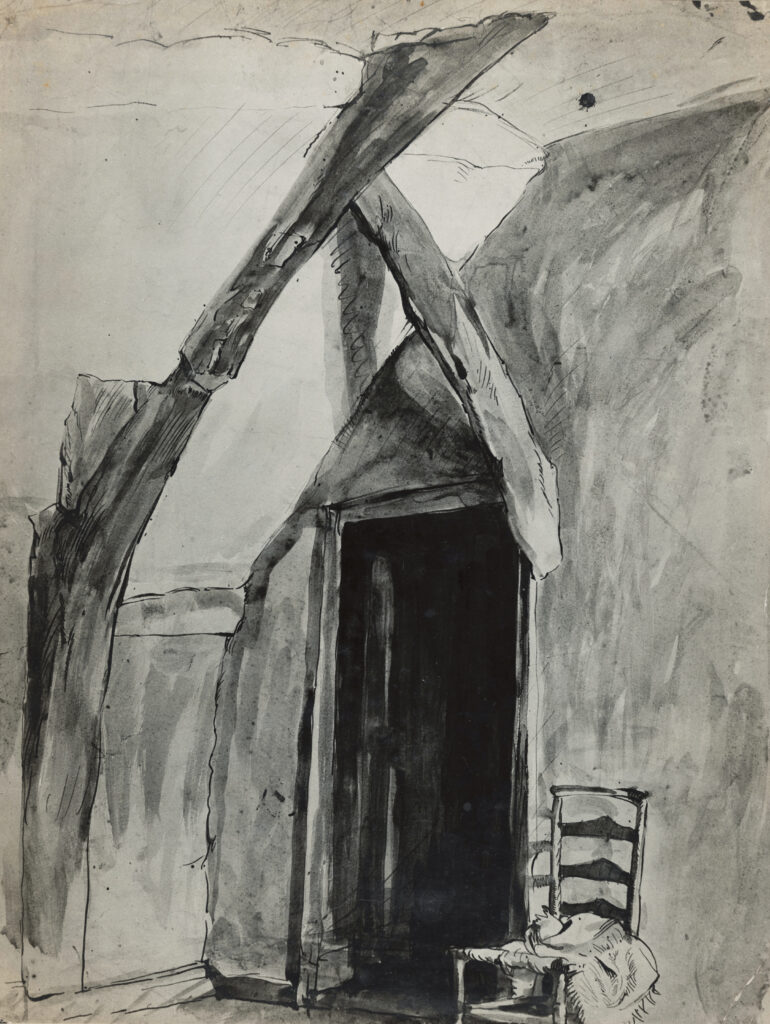
Edna Clarke Hall (1879–1979), Interior, Wuthering Heights, 1909, ink and wash on paper. Private collection, © the Estate of Edna Clarke Hall; photograph courtesy of Richard Clarke Hall/Abbott and Holder Ltd.
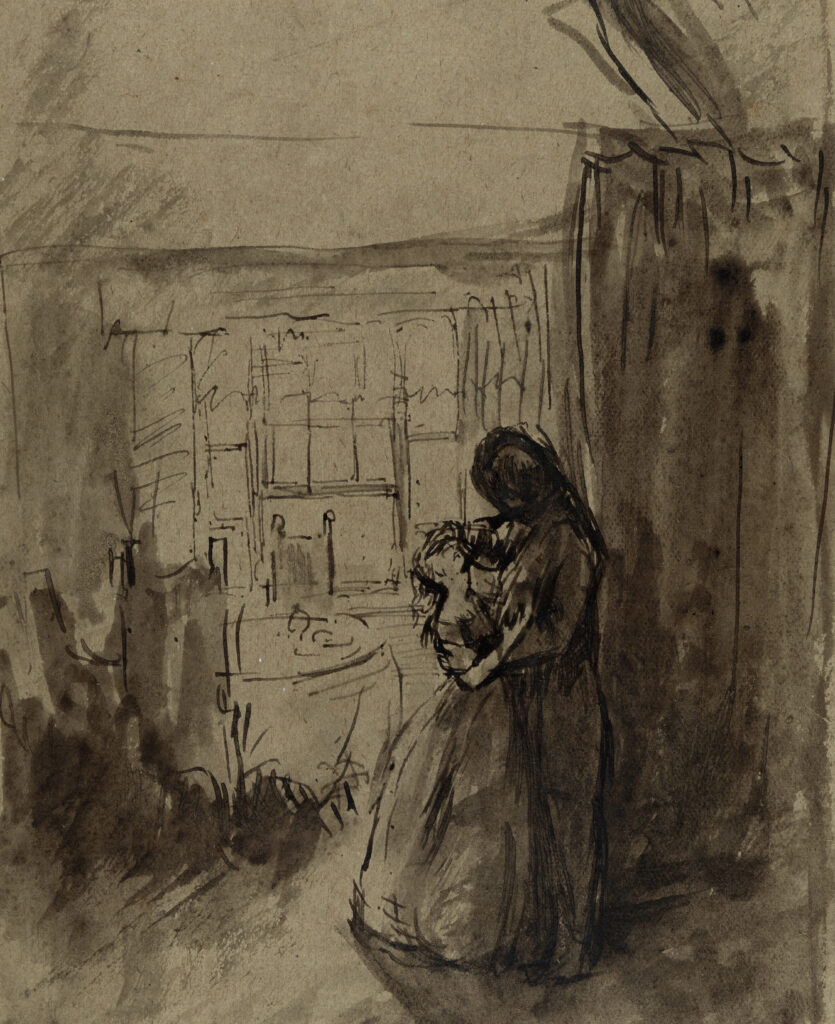
Edna Clarke Hall (1879–1979), Untitled, ca. 1920s, ink and wash on paper. Collection of Richard Clarke Hall, © the Estate of Edna Clarke Hall; photograph courtesy of Richard Clarke Hall/Abbott and Holder Ltd.
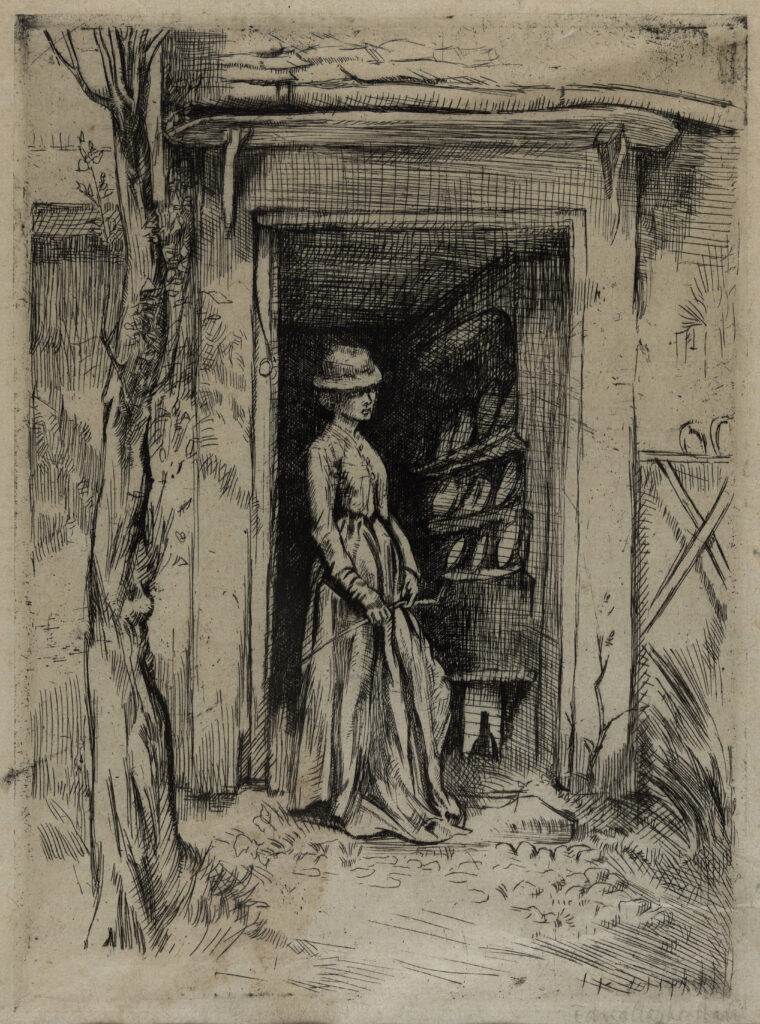
Edna Clarke Hall (1879–1979), Untitled, ca. 1920s, etching. Collection of Richard Clarke Hall, © the Estate of Edna Clarke Hall; photograph Courtesy Richard Clarke Hall/Abbott and Holder Ltd.
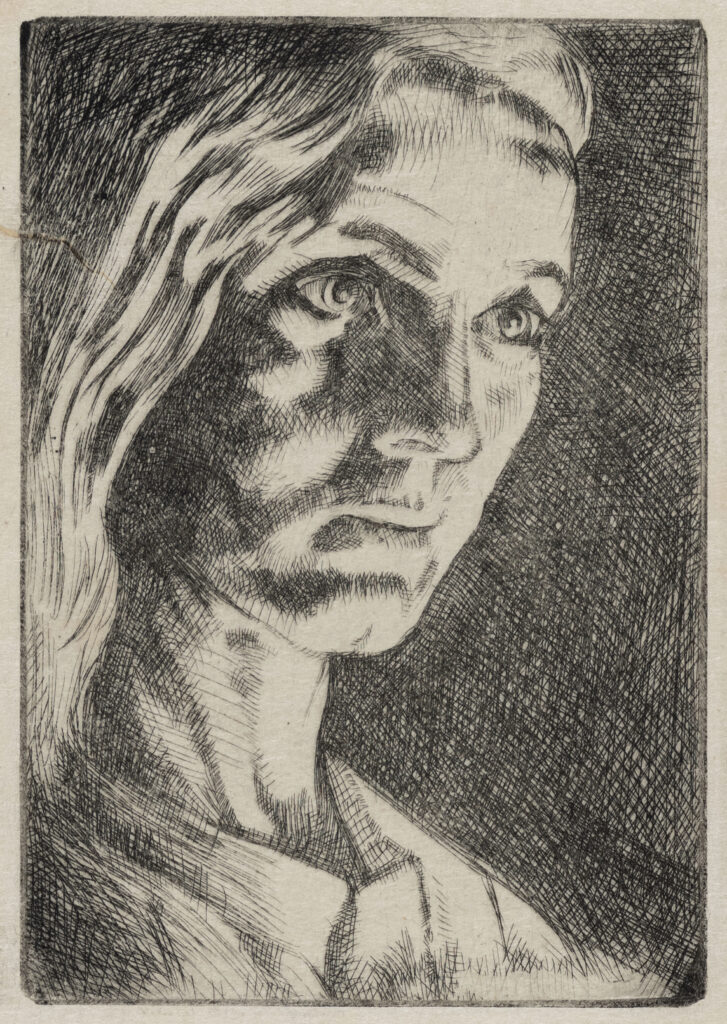
Edna Clarke Hall (1879–1979), Self-portrait, ca. 1910s-1920s, etching. Collection of Eliza Goodpasture, © the Estate of Edna Clarke Hall; photograph courtesy of Abbott and Holder Ltd.
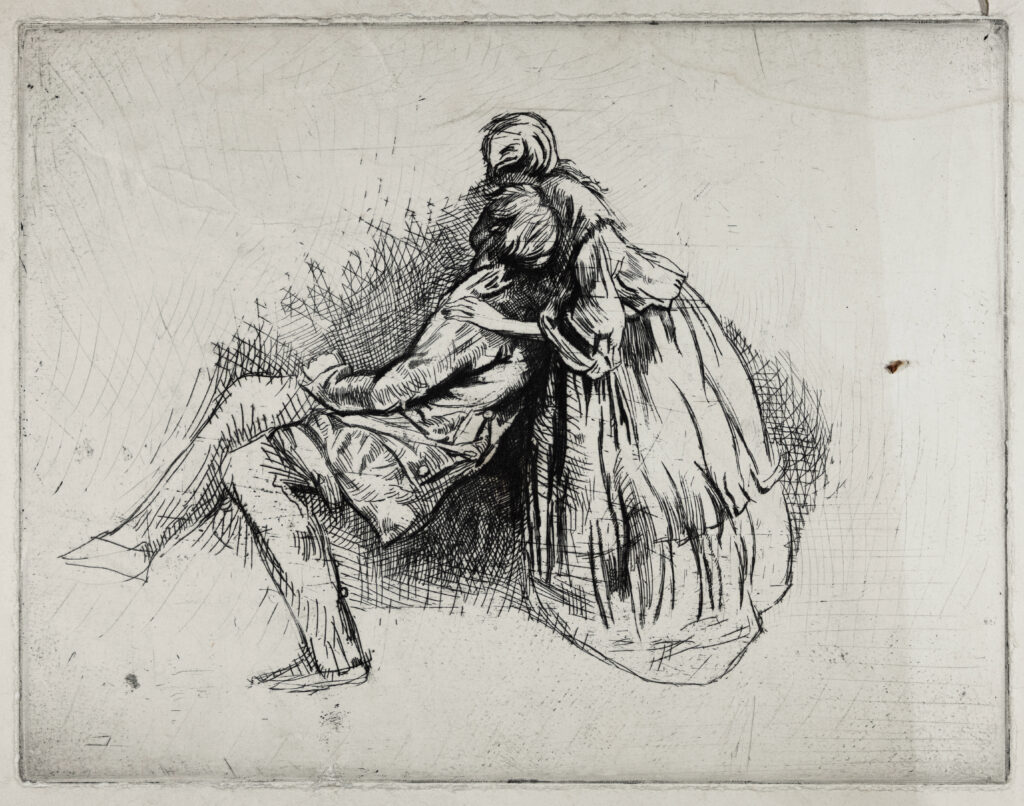
Edna Clarke Hall (1879–1979), Untitled, 1909, etching. Private collection, © the Estate of Edna Clarke Hall; photograph courtesy of Richard Clarke Hall/Abbott and Holder Ltd.
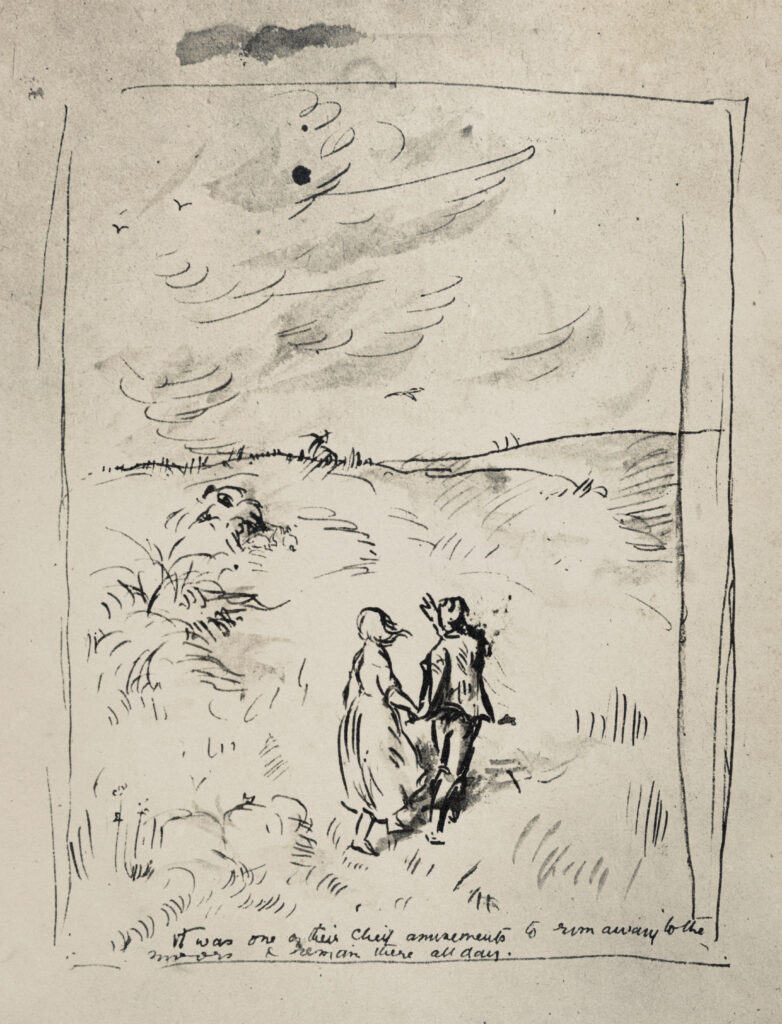
Edna Clarke Hall (1879–1979), Untitled, ca. 1920s, ink and wash on paper. Collection of Richard Clarke Hall, © the Estate of Edna Clarke Hall; photograph courtesy of Richard Clarke Hall/Abbott and Holder Ltd.


Comments
Post a Comment