Svetlana Alexievich, The Art of Oral History No. 1
Advertisement
Svetlana Alexievich, The Art of Oral History No. 1
Issue 257, Fall 2026
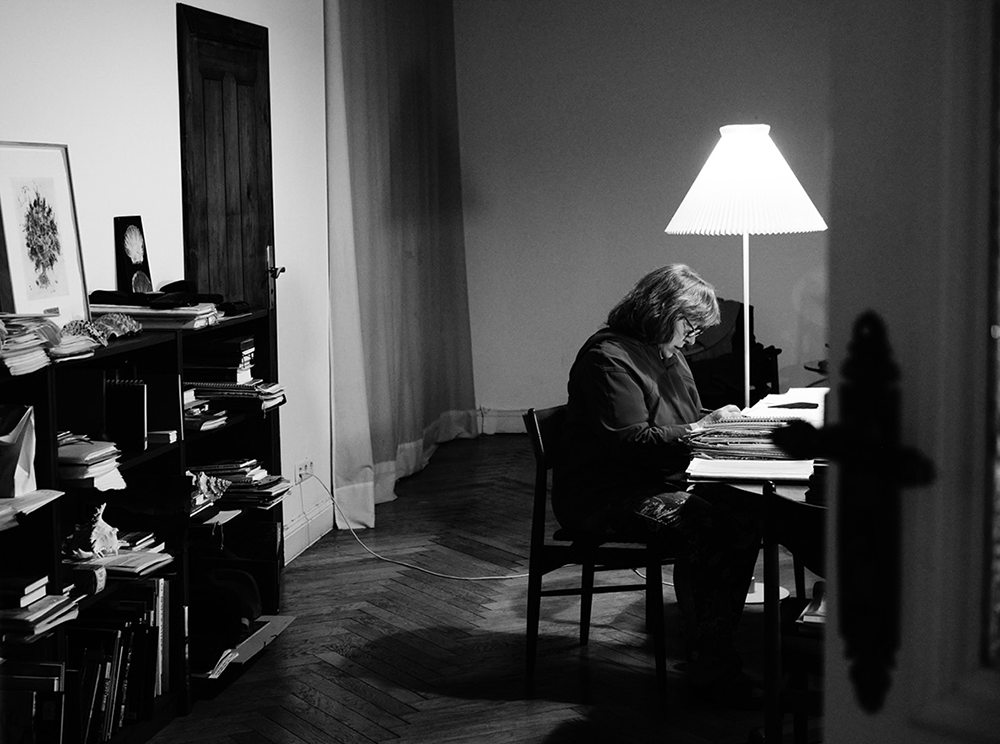
In her apartment in Berlin, 2026. © Lena Kashirsky.
Svetlana Alexievich asked me as many questions as I asked her. At intervals, she would propose that we pause so she could record me; in one of our final sessions, when a photographer, Lena Kashirsky, came to take her picture, Alexievich insisted that she stay to talk. She wanted to know what books we were reading, whether a revolution could be bloodless, what music teenagers were listening to these days in Moscow, whether I thought Putin was a happy person. She also asked about love—what it is, and why we believed it appears or disappears. She stopped using a handheld recorder years ago; the app on her iPhone works fine.
Alexievich was sixty-seven when she received the Nobel Prize in Literature in 2015, “for her polyphonic writings, a monument to suffering and courage in our time.” By then, she had been working on the project she calls Voices of Utopia for almost forty years. Drawn from thousands of recorded testimonies, the pentalogy depicts historical moments as they took place within and around her subjects’ lives: World War II, from the perspectives of Soviet women who’d served, in War’s Unwomanly Face or The Unwomanly Face of War (1985; translations 1988, 2017), and of people who had been children at the time, in Last Witnesses (1985; 2019); the Soviet war in Afghanistan, in Zinky Boys or Boys in Zinc (1989; 1992, 2017); the 1986 explosion at the nuclear power plant in Chernobyl, in Voices from Chernobyl or Chernobyl Prayer (1997; 1999, 2005, 2016); and the fall of the Soviet Union, in Secondhand Time (2013; 2016).
I first came across Alexievich when I was in eighth grade and looking through my mother’s old copies of Semia i shkola (Family and school), a Soviet magazine for schoolteachers. A spread in one of the issues was devoted to letters from readers of Boys in Zinc, which takes its name from the zinc-plated coffins in which the bodies of Soviet soldiers were sent home from Afghanistan. In these letters, Alexievich was by turns a liar, the only writer who told the truth, a raving hysteric, a great woman, a traitor, an amoral monster. Naturally, I went to the library to check out the book that had caused so much uproar. It wasn’t like anything I’d ever read about war; far from heroic, these stories told of people who felt lost and bewildered, who struggled to live with themselves after what they had been through and done. Alexievich was subsequently sued by four people she’d interviewed for the book, veterans and mothers of soldiers who’d been killed in the war, who claimed that she’d distorted or fabricated their words. Three of these cases were thrown out or dismissed. One was upheld; Alexievich was unable to substantiate two passages that the court considered defamatory. She told me she hadn’t been able to locate the tape in time for the court hearing.
Alexievich was born on May 31, 1948, in the city of Ivano-Frankivsk in western Ukraine, where the Ukrainian Insurgent Army was still resisting the Soviet Union, and spent her childhood between villages in the more Soviet-aligned regions of Vinnytsia, in central Ukraine, and the Homyel region of Belarus. She told me that, when she was a child, a teacher had rebuked her when she claimed not to understand the notion of the “hero nation”: “She said, ‘Our nation is powerful’—things of that nature. But even then I refused to see things that way.” When she thought of the men and women she knew from the villages, Alexievich said, “I couldn’t help but see each person as an individual. I remember the women’s faces, their tears … Referring to them as ‘the nation’ was something I could not abide.” This aversion has been clear to her readers since The Unwomanly Face of War, which presents details that are radically at odds with the sanctioned Soviet iconography of World War II.
Voices from Chernobyl took eleven years to complete. While writing it, Alexievich became a mother to Natalia, the daughter of Alexievich’s younger sister, Tamara, who was diagnosed with cancer before the explosion at the nuclear power plant and who died soon after, when Natalya was four—an indirect result, Alexievich still believes, of the explosion, the effects of which, she told me, killed the most vulnerable first. In 2020, Alexievich was forced to flee Minsk, leaving behind friends, family, and the transcripts of her interviews for a new book on the nature of love. Secondhand Time was supposed to be the final installment in her five-part cycle, but, as Alexievich explained to me, “the Red Man kept shooting.” She settled in Berlin, where she has been at work on her latest book, an attempt to understand the nature of hatred and violence through the “trampled” Belarusian revolution of 2020 and the Russia-Ukraine War.
The Berlin apartment where she has lived for several years has a temporary feel. It is clean and spartanly furnished, with books piled on the floor and on armchairs. The most lived-in room is the one with a long dining table and six mismatched chairs. This is where she works. Transcripts of interviews, printouts of articles, books—everything has its place. Flat stones sit between the papers—Alexievich uses them as coasters for her tea and coffee. She keeps her pens in a wooden cup covered in birch bark. In the middle of the table is a stack of blank paper next to a pile of handwritten pages, the lines spaced widely for ease of revision. Alexievich writes her books by hand.
We met several times between July and October of 2025. Before each session, Alexievich would lay out a dish of meat patties, slice some cheese, and make me coffee. I saw this as something like a village custom: feeding the guest before turning to serious conversation. The patties were made by Liuba, one of her assistants; Alexievich confessed that she herself has never learned how to cook. When I presented Alexievich with the final draft of the interview in person this past July, she marked it up with a great many edits. She reverted most of them after I read her the original passages followed by her revisions. “I have a much better ear for other people,” she said. “Thank you for not letting me deface my own voice.”
SVETLANA ALEXIEVICH
You can smoke if you like—there are some cigarettes over there.
INTERVIEWER
Would you like one?
ALEXIEVICH
Me, no. I’m cold just sitting here. It’s not so bad out, but this wind is no good for me. I used to be a very healthy person, and then I got this trigeminal neuralgia.
INTERVIEWER
Was that after Chernobyl?
ALEXIEVICH
Nobody knows. It could be from Chernobyl, or maybe it’s just from my life. But I don’t want to talk about my personal affairs, it opens the door to all sorts of undesirable attention. People will start talking about who Alexievich is sleeping with instead of what she’s doing.
INTERVIEWER
How were you able to go to Chernobyl? Did you need special papers?
ALEXIEVICH
It was a time of chaos. They let me right into the zone. My parents lived in the Mazyr district, part of which had been affected. My mother almost went blind from it. In their village, there was a whole street filled with evacuees from Chernobyl. At first, officials believed it was just the ten kilometers around the plant that needed to be evacuated. Then the scientists thought it should be thirty. It turned out that even at a hundred-kilometer radius, many areas were seriously contaminated. Much later, when I visited Fukushima, I wasn’t allowed within twenty kilometers of the power plant. It didn’t matter what papers you had, you couldn’t get in.
INTERVIEWER
Do you remember the period just after the explosion as a time more of silence or of deception?
ALEXIEVICH
More than anything, there was confusion. Adamovich [Ales Adamovich, the Soviet Belarusian writer], I remember, persuaded Gorbachev to send in the scientists, who showed up without even bringing their shaving kits. They were told that there had been an explosion at a nuclear power plant, but for some reason they thought that they’d be there for only a day or two. The first time I went was several months later, and people kept telling me about things they didn’t understand—how the fishermen couldn’t find worms, because they’d burrowed deep into the earth, how the milk wouldn’t curdle at the cheese factories. The honeybees wouldn’t come out of their hives. The evacuations started, I think, in the first month. The old women hid, they wouldn’t leave. I mentioned radiation to one of them and she said, “I’ve seen that radiation, all right! It’s yellow with green in it. I saw puddles of it in my garden, and I told the other women, and we ran and looked, and she had it in her garden, and the other one, too!” God, it was wild, the way the mind made sense of it.
There was a story going around about Gorbachev telling the scientists to show him the radiation. “We can’t, it’s invisible.” “But I want to see it!” I also ran into the soldiers who’d been flown in on helicopters from Afghanistan. I asked them, “What are you doing here with your machine guns?” They said, “We’re collecting the radiation, that’s what.” So you had some of them running around with their guns, others out in the village washing off firewood or burying soil in the soil.
These were the kinds of things that exploded our worldview. They made you realize that culture was just a chest filled with old manuscripts. There were no books in there that could help me. Our philosophers turned out to be useless when faced with the unprecedented. Derrida, Baudrillard—philosophy fell silent. What was happening? How would we live with it? That’s when I decided it simply needed to be witnessed. Which is what I did.
INTERVIEWER
I wanted to ask about how you talk to people.
ALEXIEVICH
Just like we’re talking right now.
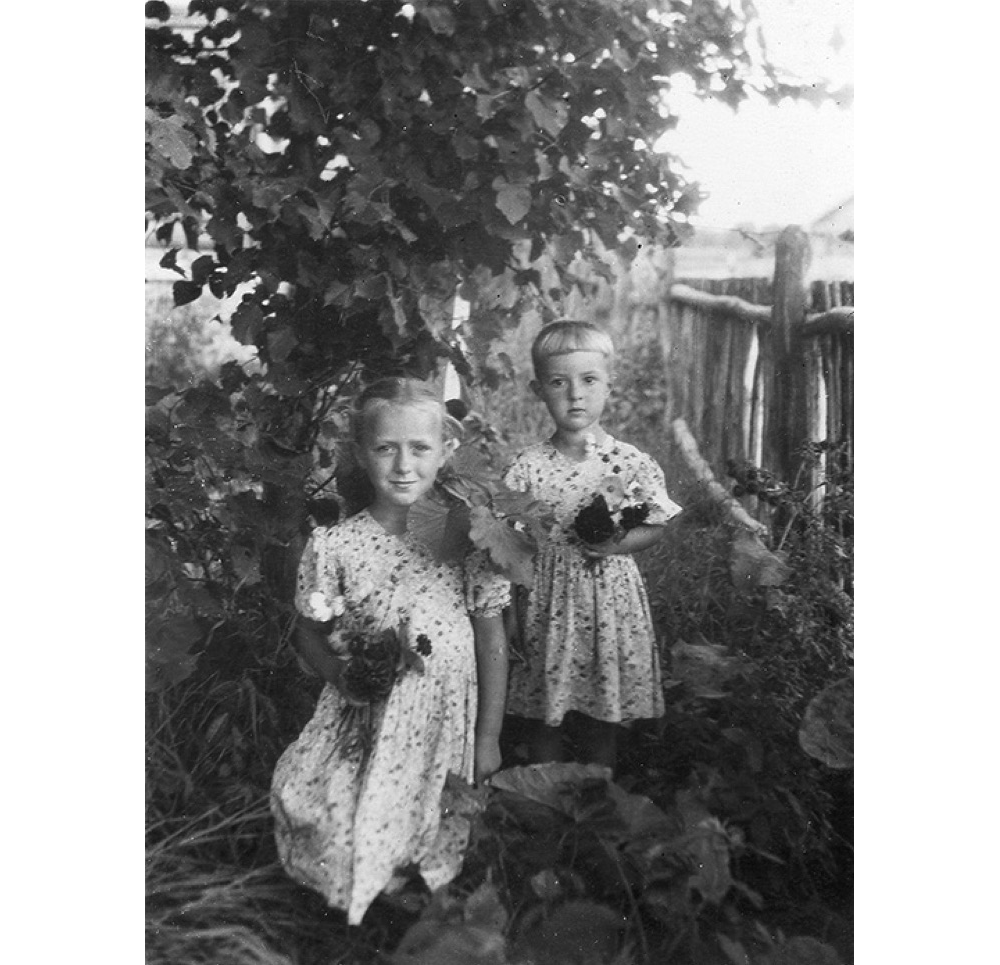
At left, with her sister, Tamara, ca. 1958. Courtesy of Svetlana Alexievich.
INTERVIEWER
Exactly like this?
ALEXIEVICH
Yes, we sit and we talk—about what interests me and about life in general. About love, about everything in the world. That way, what comes out is three-dimensional. If you cut straight to the part you need, which is what journalists do, it won’t be interesting, and it won’t be the truth, either. Not the whole truth.
INTERVIEWER
Do people always open up when you ask questions, or can questions get in the way?
ALEXIEVICH
You have to ask questions, of course. Your job is to scour away the banality and return people to their true selves, to make them face what they rarely tap into. With every new person, you have to find a new way to do it. When you ask an interesting question or you share what happened to you, you help people really think about what they’re saying and not just repeat whatever they’ve picked up from the newspaper. But not everybody is capable of it, not everyone wants to put themselves through that. Either the chemistry starts to kick in or it doesn’t. A person might be wonderful, but you can tell that the conversation just isn’t going to happen. You can try to push it, but it will be a product of your own intellect, rather than of that mysterious connection. Life doesn’t come from the mind. Some people I can call two years after our last conversation, and they’ll say, “Oh, Svetochka! I think of you all the time,” and we’ll start talking again. With others, that won’t happen. That doesn’t mean they’re not extraordinary people, just that you can’t connect with them. They might have some insight, but you don’t have the right antenna to pick up their signal.
INTERVIEWER
So it’s a kind of mutual attraction that makes people open up?
ALEXIEVICH
Whenever I’m with people, like at a dinner, they always ask, “Sveta, why are you being so quiet?” Well, I like listening. Maybe I’ve never understood myself either—it’s hard to make sense of my own words and actions—but that’s another conversation. I’m interested in the world. It must run in the family. My father was the kind of person—and my mother would give him a hard time for it—who would stop what he was doing to carry a bucket of water for an old woman and then stand there and talk to her for an hour. Even I have sometimes been surprised at how readily people will hand their stories over to me. I remember one time—it was May ninth, Victory Day—I was in Moscow, and I came across a group of nurses, who had a lot of other journalists talking to them. As it started getting dark, the women bade goodbye to the journalists, but to me they said, “You come with us. We’ll drink.” When you’re on the street, you can’t speak very openly or for very long. You’ve got to get inside, behind closed doors. We ended up talking all night, almost, back at the hospital. The floor supervisor came in at one point, asking, “Who is she?” “She’s with us.” They saw that they could trust me, that we were kindred, even though I am the kind of person who faints at the sight of blood. I also think it’s because—you’ve probably run into this—when you’re short, up until your old age, you seem like a puppy. You’re not quite adult.
The thing is, you can see someone in the morning and have one conversation, but if you go in the evening, it will be totally different. If you show up when they’re alone, you can work together to help them go deeper inward. It’s always a gift when someone I’m interviewing says, “God, Svetlana, I didn’t even know I remembered that!” That tells me that we have done our job. But if there’s someone else in the room, that person will often act as a censor. If it’s two women who fought at the front, that’s one conversation, but if one woman did and the other did not, it’s another. With The Unwomanly Face of War in particular, I refused to record interviews with other people present. The women would start performing when there was an audience. Especially, God forbid, if it was their husband, butting in with corrections!
INTERVIEWER
Men are amazing like that. For some reason they can’t help but insert themselves.
ALEXIEVICH
I remember one man who immediately started answering my questions himself. He turned to his wife—“Go bring us some cake! Or find us some wine!”
But it was having their children around during some of those interviews that led to me writing my second book, Last Witnesses. They would spontaneously remember their own experiences, and I realized that I could get an even better sense of the pain of that era from people who had been children during the war. They might say, “The sky filled with big fat airplanes, then Mama was lying there dead already.” Or “The Germans came to our orphanage …” Back then, the Germans believed that children’s blood helped wounds heal faster, and so they went to orphanages to get it. But when they saw the Germans, the children would shout, “The daddies are coming! The daddies are coming!” They’d run into their arms. Because what do children do in an orphanage? They wait for their fathers or mothers. The meaning of a story like that—you’d need so many words to express it.
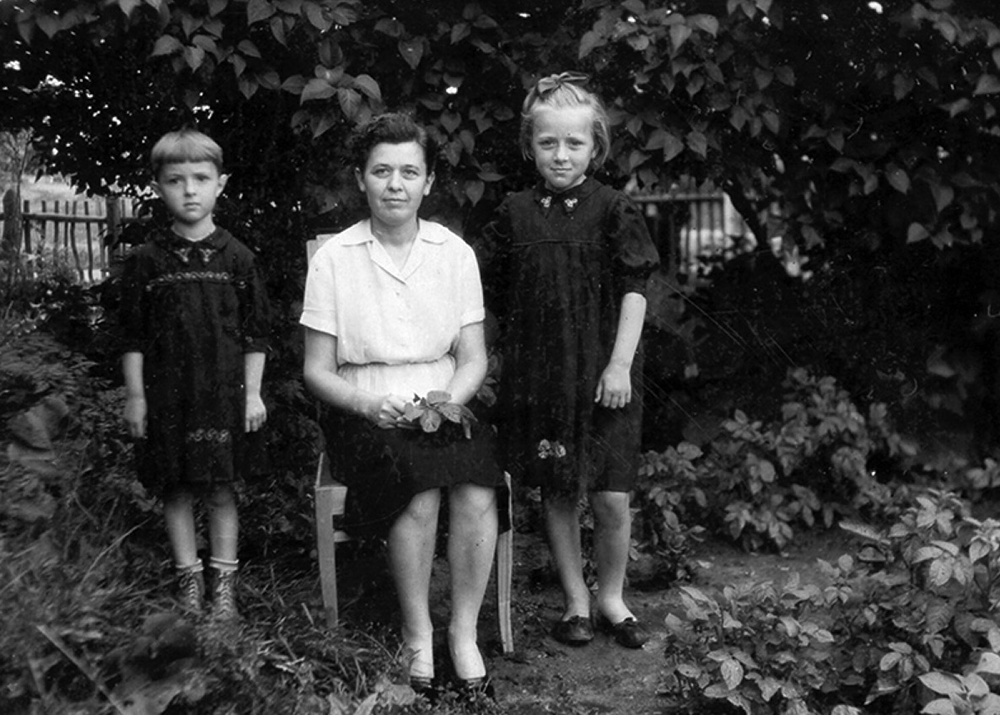
At right, with Tamara and their mother, ca. 1958. Courtesy of Svetlana Alexievich.
INTERVIEWER
How do you think childhood memory relates to the human soul?
ALEXIEVICH
Children of the war often ended up dying at an even younger age than their parents did. Children aren’t built for such terrible shocks. After Last Witnesses came out, I’d call the people I’d interviewed, and their own children would answer, “Papa died,” “Mama died.” It happened all the time. Psychologically, the children of war carried the bombs inside them.
It hadn’t been easy to find people capable of telling me what had happened to them—I needed people who were adults but also still children inside. Children are innocent, they don’t say political things. The person I remember best was a professor, this tall, handsome man. He remained fairly composed as he told me the story of how his mother had been sitting there embroidering and the Germans broke into their house, dragged her outside, and later she was found dead. Apparently somebody had reported on the family, saying that his father was in the partisans. Suddenly it was like a child was sitting in front of me. “What did Mama ever do to them? She was just sitting there and embroidering. I had such a beautiful mama.” For children, incidentally, beauty is extremely important. He hid under a bench and they couldn’t drag him out for days, not even with a poker. They would slide food under there for him. By the time they pulled him out, he was sick. His grandmother took care of him the best she could, gave him herbs, brought in a healer. They were warding the fear away. It was a very long process, but life went on. He loves his wife, has lovely children. But that was his most powerful experience. Because a child can’t master that terror.
INTERVIEWER
Do you spend a lot of time with your subjects?
ALEXIEVICH
Usually. I’ve never spent less than five years on a book. I suppose it was seven with the women for Unwomanly Face, and then I spoke to them again when I was expanding the book for a new edition. If I feel that a book should have, say, twenty or twenty-five really powerful stories, I need to spend a lot of time with those people. There are things I realize are missing only when I’m in the process of editing. Then I’ll call, and we’ll keep talking on the phone. I really regret that I wasn’t able to get more from those women, when it came to … love. But they were impenetrable.
INTERVIEWER
Why?
ALEXIEVICH
For that generation, talking about love was completely off limits. They wouldn’t talk about Stalin and they wouldn’t talk about love. I couldn’t understand why it was those two things. But Stalin had been their great love. Would a sixteen- or seventeen-year-old girl run away from home to go fight in a war without that great love for Stalin? Of course not.
Love was different for that generation. The first thing I’ll say is that it was a lot more chaste, even though the world was extremely harsh. Take rape, for example. The women didn’t want to admit when the fathers of their children were Germans. The German women confessed that they had been raped, but ours weren’t ready to acknowledge what had happened to them.
It was hard to get our women to tell me how they had lived during the war. All day long, they would carry the men off the battlefield, saving their lives. They spent their nights hidden away, fifteen or twenty of them to a dugout. There were no bathrooms, and the women would go pee in groups of five or seven. Otherwise, they might be caught and taken off into the bushes and raped by the same men they’d just saved. They were men, after all—they hadn’t been with a woman in five years, at night they turned into beasts. I got those women to say a few things, but none of them ever told the full story. They just didn’t want to go there, they didn’t want to destroy their image.
By the time I was working on a new edition of Unwomanly Face in 2003, it was after Gorbachev, and a lot had changed, in our society and in us. Both men and women had become more bold. Take one soldier’s story. A unit finds itself surrounded. Everyone realizes that in the morning they’ll have to mount an attack, or they’ll be bombed from above. Will they survive? This man recalled, “We had three nurses, they wanted to support us. They offered themselves to whoever was capable—not all the men were, under those conditions. In the morning, we broke through, and I never saw those women again. But I wanted to thank them,” he said. “They must have died.” How do you tell this man’s story? You have to do it in a way that won’t get the women condemned in the court of public opinion. People might think that the women’s sacrifice was actually deviance. Not everyone is capable of comprehending their greatness.
INTERVIEWER
Have you ever thought that a person you’re talking to might be lying?
ALEXIEVICH
Of course, but I’ve never encountered blatant lies. People might embellish, especially women. But the embellishment is also a document. And the idea is to create such a high temperature of pain that it burns away these impurities. I kind of purify the voices, and end up with this very hard, concentrated object. I’ll include just three out of ten people I’ve talked to. If you have a sense for it, you can hear right away when the material is capable of that kind of self-organization.
INTERVIEWER
What makes those three of ten different?
ALEXIEVICH
A talent for remembering and speaking. Let me give you another example. I remember this woman who’d been a sniper. She lived in Kyiv and had three Medals of Glory, which is the equivalent of being a Hero of the Soviet Union. She was an exceptional woman, extremely brave, according to her comrades. She had studied at university until she left for the front, but she couldn’t talk about herself. That was when I realized that simple, uneducated people are better storytellers than people who have read Tolstoy and Dostoyevsky. They don’t lean on the kinds of things that people like us usually say. The way we talk, how we socialize, it’s either in banalities or in a system of codes. It isn’t like that for them, their stories are total originals. The conversation takes the kind of turn that makes you shudder. I remember one woman who’d spent the war as a laundress—what could be simpler? There was this little thing she said—“They bring you their linens, and there’s a leg or a sleeve missing. Or a hole in the chest. You wash with your tears and you rinse with your tears.”
There was another woman who stuck with me. After the war, she was very sick, and no medicines helped her. This old doctor told her, “Get married and have as many children as possible. With every child your body will regenerate.” And so she had five sons—I saw them myself, these big, strong men. Why did I choose her? She and I were sitting and drinking tea in her garden when she suddenly told me that she’d been in love with a lieutenant from another battalion, who was killed in action. When she was able to make her way to his men, they showed her his grave. She said, “They talked to me, they walked me to him, but the whole time I had the feeling that they didn’t accept that I was alive and he was dead. They wanted me to be dead, too.” That was what I’d been looking for.
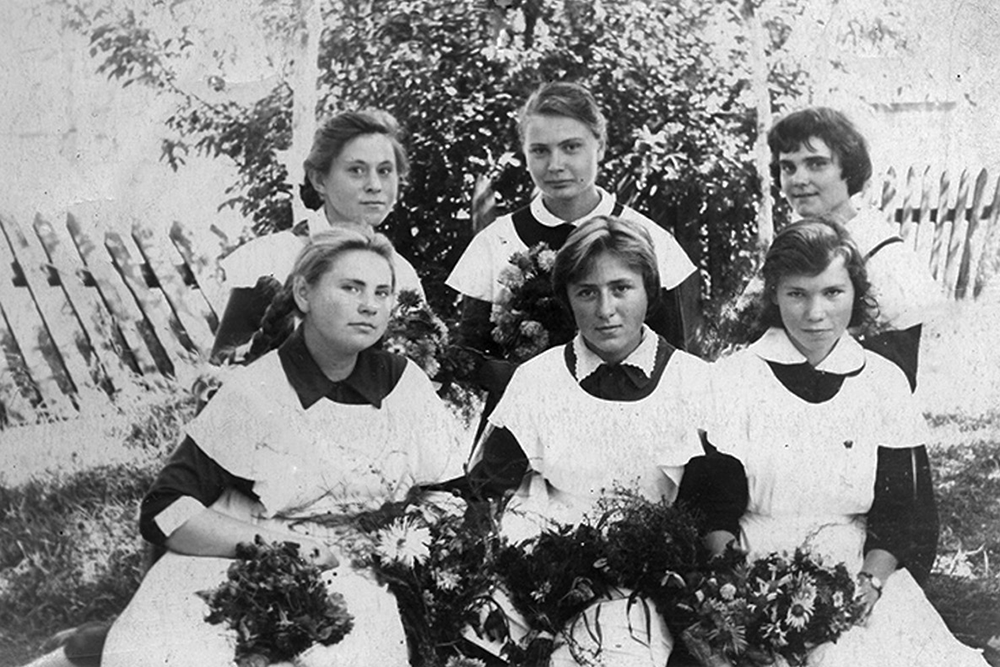
Bottom row, at center, with classmates, in Balazhevichi, Belarus, 1964. Courtesy of Svetlana Alexievich.
INTERVIEWER
Have you found that people who have been through an extreme trauma tend to be overwhelmed by it, or can it sharpen their vision?
ALEXIEVICH
Oh, I don’t know. It’s hard to tease out the truth here. A traumatized person is trapped in a closed loop of memory—it takes immense strength to break free. I know this from my own experience. If it weren’t for Dostoyevsky, would I have found the strength to go on? But personally, I don’t like the way suffering is worshipped in our society. Remember the old argument between Shalamov and Solzhenitsyn? Solzhenitsyn says that camps uplift and purify people, Shalamov that they corrupt both the victim and the executioner. I feel more aligned with Shalamov.
INTERVIEWER
Pushkin had a very elegant answer to this question. He said that unhappiness is a good school, but happiness is the best university. That you can learn in both places, but you will learn more from happiness.
ALEXIEVICH
People are different now. Online, every day, we see people who have been killed. Seeing death—this is our university. I think we know more about life now. In my generation, we were taught to die for the motherland. We come from a totally martial culture, you understand? They’d tell us about the end of our lives right away, as though the rest of life didn’t exist, didn’t matter. That’s why, when I was writing The Unwomanly Face of War, the kinds of details the women remembered felt so important. One of them told me, “I went off to fight, I was ready to give my life for my nation. But there I was, walking in the woods one day, and I saw these beautiful snowdrops. I thought, If I get killed, I’ll be lying here in these flowers. It was only later that I saw girls who’d been rolled flat by tanks.” Men, when they talked about war, never mentioned that kind of thing. “You can’t imagine how beautifully the birds sing before an attack.” Such heightened awareness. Think of the world in Last Witnesses—the world of the children, no higher than one meter off the ground. When they find a dead hedgehog or hare, they’ll give it a proper burial. A few days later, they’ll pour the dirt over their mother in the same way. It’s all connected for them.
INTERVIEWER
What was your childhood like?
ALEXIEVICH
I was born in Ivano-Frankivsk [in western Ukraine]—my mother is Ukrainian, my father is Belarusian. I lived there until I was five, and then my father took me to live with my Ukrainian grandmother, near Vinnytsia. After third grade, we went to Ukraine only for the school holidays, because we were living in a village in Belarus. It’s too bad that my grandmother on my father’s side died of typhus when she was with the partisans. They say I look like her.
My most vivid memories are of Ukraine, of when I’d go to see my Ukrainian grandmother. The warm smell of the air, of dust, of mud—it has a smell there. The smell of oxen, of wagons. My mother was kind of a hard woman, but my grandmother? For me, she embodied the feminine world you need when you’re little. She was so beautiful, she always wore a white blouse, she sang very beautifully. We’d arrive, and the first thing my grandmother would do was show us what she had set aside to be buried in. This white blouse, this black skirt … Another time it’d be a different blouse, she’d sewed something new. She started preparing her outfit when she was about seventy-five, and she died at eighty-six—she changed her mind many times before that.
I remember walking along the railroad tracks with my grandmother and her saying, “This used to be our land. For a long time, I’d pass by and I couldn’t get used to it. I kept being drawn back here.” The Soviets had seized everything. “And over there, in that field, after the war, that’s where the Germans lay, one beside the other.” The Ukrainians gathered their own people, but the Germans were left there because the village didn’t want to bury them, so that’s where they rotted. “Then they became our earth. For a long time, no one planted anything there. To this day, a tractor will dig up a skull, or a German ID badge.” She also told a story about how she let a young German wash himself in her well. “He was just a kid.” And then she fed him.
I grew up surrounded by conversations about death. I was born in 1948, and I’d say that my generation was in the circle of death for the next twenty years. For us, because it was always something—the Gulag, a civil war, a revolution—death became domesticated. And, for some reason, it always walked hand in hand with love. I remember those Belarusian women in the village, how they’d sit together and talk late into the night, even though they had to get up early. And the Big Dipper above them, and the forests, which are so dense in Belarus. I remember one woman telling a story about how she’d just gotten married when, for some reason, her husband had to go somewhere, and by the time he came back, war had broken out. She had only one night with him, and she told the story of that night. Of course, he never returned. It was this enchanted death. I fell in love with those old women from the village for the rest of my life. That Belarusian speech, it’s so gentle—that folkloric way of seeing the world comes through. There’s something pagan about it. When someone died, they’d carry the coffin through the whole house, and then they would take it into the field, to the barns, and in the garden they’d stand with it in front of each tree. That’s why I always include the suffering of birds and animals in my books, especially in Voices from Chernobyl. My grandmother talked to hedgehogs and magpies.
INTERVIEWER
Did you believe in God as a child?
ALEXIEVICH
I don’t think I really believed in God. My grandmother baptized me in secret, without telling my father, when I was about eight or nine. I remember walking with her through the garden once, everything in bloom, and out of nowhere, she said, “And you don’t believe in God.” I shrugged. She pointed to the trees—“Well, who made all this if not God?” I had to agree.
INTERVIEWER
How old were you when you learned to read and write?
ALEXIEVICH
That was very early, when I was around five. It wasn’t like anyone was teaching me, but there was no one to watch me, so my mother or father would take me with them to class. They were both schoolteachers—my mother taught German and my father was a history teacher. He was the principal, and we always lived at the school.
INTERVIEWER
Literally in the building?
ALEXIEVICH
Yes, the door to our apartment was right next to the entrance. So I had nowhere to hide.
INTERVIEWER
Were you friends with the other children in the village?
ALEXIEVICH
Yes, of course. But I was a very un-village-like kid. I was always reading. I wasn’t interested in washing clothes or planting crops. The other children had very hard lives. I’d give all the girls in my class my dresses to wear. My mother would get mad at me. My Ukrainian uncle who’d served in Berlin once brought me a leather satchel—nobody in the village had ever seen anything like it. I came home in tears and told my mother that she had to sew me a canvas bag like everyone else had. She begged me to keep using it—she liked her children to be special. She kept trying to scare me. “You’ll be poor for the rest of your life—people will always rip you off and cheat you.” Things didn’t turn out that way at all.
The people I loved talking to weren’t children so much as certain adults who were thought of as very strange. There was one old man whom all the men laughed at, but I found him interesting. He couldn’t bring himself to kill a boar. Or this Ivan the Fool type who would sometimes say very curious things, as though a higher power were speaking through him. Or this woman Lizaveta. People would send for her whenever anyone died. She wouldn’t sing, she’d incant. “Where did you go? You left your pretty wife behind. And your little kids. Where will we find you? Come see us! People can talk to the living and to the dead.” Even after my sister died, Lizaveta did her incantation. My sister was only thirty-five. Nobody in my family knew what to do—my parents were teachers, my father a communist. Lizaveta came to us and said, “You need five kinds of food—fruit jelly, rice porridge …” We all got to work and it made the pain easier to bear. Otherwise we’d just have been sitting there weeping.
My father would say, “Why are you always talking to such strange people when we have front-ranking workers around?” But I’m not interested in the vanguard of labor—these are the people I’m interested in.
INTERVIEWER
I’m trying to imagine how you ended up in the journalism department in Minsk, coming out of that beauty and paganism.
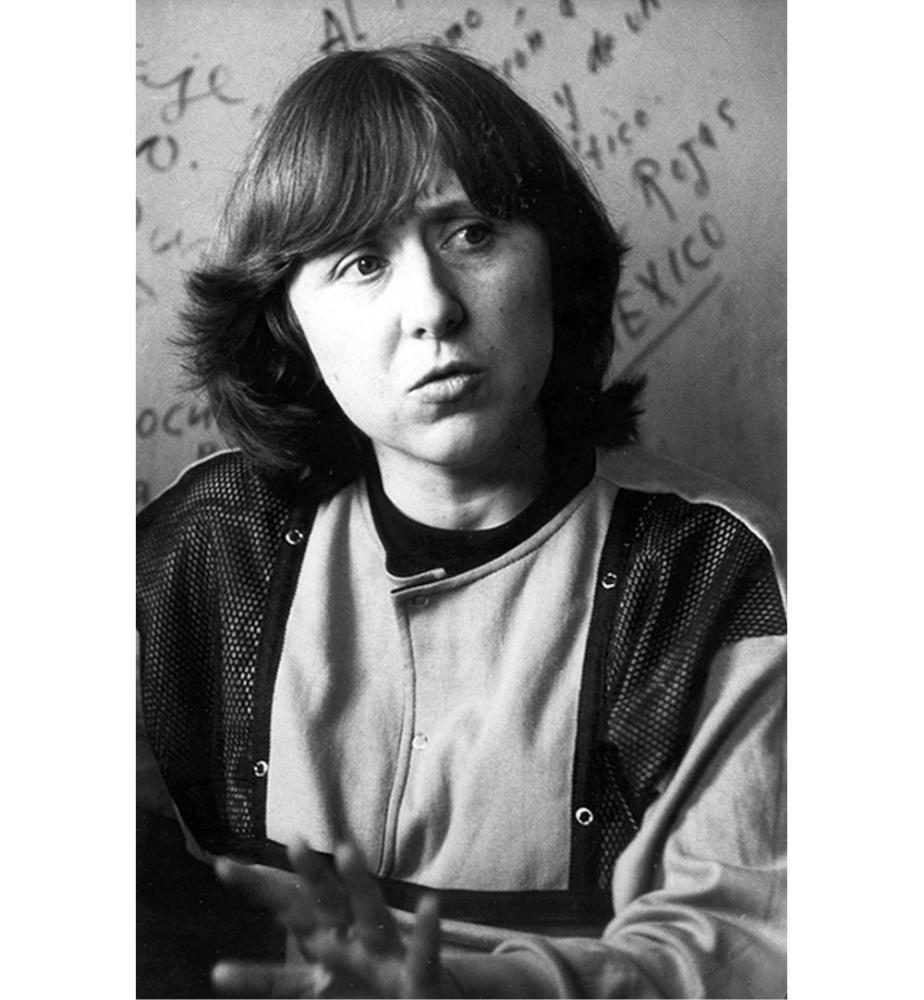
In rehearsal for the 1985 play adaptation of The Unwomanly Face of War at the Taganka Theatre in Moscow. Courtesy of Svetlana Alexievich.
ALEXIEVICH
It took me a long time to get used to living in the city. When I graduated from journalism school, they claimed I was anti-Soviet and sent me to work at Maiak kommunizma (The beacon of communism), a newspaper in Bereza, a small town in the Brest oblast. Eventually, Inna Mitskevich, the deputy editor of Selskaia gazeta (The village newspaper), which was a national newspaper, visited from Minsk, read some of my pieces, and said, “Svetlana, we’re hiring you.” I have good angels watching over me. My father was delighted. Before the war, he’d studied at the Communist Institute for Journalism.
INTERVIEWER
Did he graduate?
ALEXIEVICH
No. When they were bombing Minsk, he dropped out of his second year and went to the front. He was one of five sons, and the only one to return from the war. The others were taken prisoner in the early days and disappeared without a trace. My father was in the air force, a mechanic. Sometimes he’d say he was glad he never killed anyone, he just filled up the gas tanks. He was a reader. After the war, when his unit was stationed in western Ukraine, he spent a lot of time at the library—that’s where he met my mother. They got married. My father went back to Belarus, to the city of Mazyr, and got a job as a political instructor at the district party offices and wrote for a newspaper. They wanted to make him the district party secretary, but when the KGB looked into his background, they noticed that during the war, my mother had been in occupied territory. She was a child at the time, in the village of Vyssha Kropivna, near Vinnytsia. Like the rest of the teenagers, she was supposed to be sent to Germany, to the labor camps. They rounded them up and were about to load them onto the trains when an old German man came and started picking out pretty girls. He was in charge of the officers’ dining hall and was looking for people to work there. Mama was very beautiful. Where else could she have gone?
The party told my father that he had to divorce her. But they’d already had me, and he wouldn’t. A friend of his, who worked in the Central Committee of the CPSU [Communist Party of the Soviet Union], came to the rescue. We packed up and left Mazyr in a single night, and he spent the rest of his life as a school principal.
I vacillated for a long time between teaching and journalism. My great-grandfather was a teacher, too. But, of course, I liked traveling and writing better. In order to get into the journalism department, you had to have two years of work experience. But they didn’t have enough journalists at the regional papers back then, and I’d written for one in high school, so they took me on as a reporter at Prypiatskaia prauda (Priypyat pravda), in the town of Narowlya in the Homyel oblast.
INTERVIEWER
What kinds of things were you writing in high school?
ALEXIEVICH
My God, I’m not like Tolstoy, I don’t remember having my diapers changed …
INTERVIEWER
What about in the journalism department? Did they teach you to write?
ALEXIEVICH
No, how could they teach anyone how to write? You can only learn on your own. What you need is to read, to think. Barely half the people who graduated ended up working as journalists. You did a little of everything—Marxism, philology, economics, theater—and you ended up with nothing. That’s why, as soon as I got there, I decided I was going to learn from the real characters. In our third year, a friend and I ended up in Hrodna, where Vasil Bykov, the writer, was teaching. At the time, the KGB was all over him, and he was having issues with his wife—he was in love with another woman, Irina Mikhailovna Suvorova. It was interesting to see this writer as a real person—an affair to conceal, the KGB peeking into his window, and everyone reading his books. He always had a smile on his face. We gave him a bouquet of yellow roses when we left.
INTERVIEWER
In your earliest pieces, did you feel you had to conform to the style of the journalism of that time?
ALEXIEVICH
No, since that wasn’t the kind of writing I did. Even when I was working at Maiak kommunizma and at the much larger Selskaia gazeta, I wrote about people. There were conflicts. An editor might say, “You have to write more heroically. Where is the leading role of the party?” But I loved life, capturing life. I loved going on assignment. There were no hotels in the villages, so journalists were put up in the homes of farmworkers. Most often, they were single women. They’d tell me about their lives. That’s how I got the stories of two women who’d fought at the front that I included in The Unwomanly Face of War. One of them had been a sniper. She told me, “The first man I killed was a German officer. I couldn’t pull the trigger right away. The first time I saw him, I didn’t shoot. The second time, he wasn’t wearing his cap—my Lord, he was so handsome, his hair. Suddenly my friend nudged me. ‘What are you doing? Shoot!’ But I couldn’t pull the trigger. As soon as I did, I felt sick.”
Of course, that sort of thing was cut when I was writing for newspapers. They only wanted what fit in with the schema of Soviet life, so when you were trying to get a real look at people, that was trickier. I wanted to show the whole person, as Dmitry Furmanov said, guts and all. It was the same during perestroika, when I started writing about the Gulag. I remember the story of a boy who was put into a camp for the children and wives of enemies of the people. The commander was known to be truly horrible, really sadistic. One day, when the boy was around seventeen, he was summoned to see the commander. He was terrified. The commander told him that he was in love and asked the boy to help him write a letter. “They say you write poems.” My editor cut that part out, but then he kept coming back to my office, wanting to talk about it. “That bastard, he was really in love. Can you believe him? One minute he’s running people over with a tractor, the next minute he’s crying.”
INTERVIEWER
The censors were before my time, and now they’re thinking of bringing them back.
ALEXIEVICH
Yes, it will be the same thing. Before Gorbachev, we tried to say what we could, relying on certain tricks. But there were always losses. The Belarusian Printing House in Minsk put out, say, ten newspapers. It had its own censorship department. It was a complicated system. You would write something, hand it in to the head of your department, and she would go through it. After that, it would go to an executive secretary, and he would do his part. Then it might go to the editor if he had time for it. And only after all that would it go to the censor—God forbid the censor should find anything wrong.
INTERVIEWER
How did you come to write your collection of monologues “Ia uekhal iz derevni” (I left the village)? I’ve heard about it, but it was never published.
ALEXIEVICH
You don’t need to read it. Nothing interesting there. It was an experiment—I started interviewing people who had left their villages. Young people. How did they leave? Why did they? The magazine I was working for, Nioman (Nioman), refused to publish the piece. I sent it to Moscow, to Novy mir (New world). [Aleksandr] Tvardovsky was the editor at the time. It was a brave magazine. Two weeks later, I was summoned to the Central Committee of the Communist Party of Belarus. They had the proofs. “Who’s going to want to stay in their village after they read this?” The secretary of ideology said, Only an anti-Soviet could have written this, a traitor. So it never came out. And, about six months later, I was fired by Nioman.
Later on, with The Unwomanly Face of War, I realized that “Ia uekhal iz derevni” was just a prototype—I hadn’t done it the way it needed to be done.
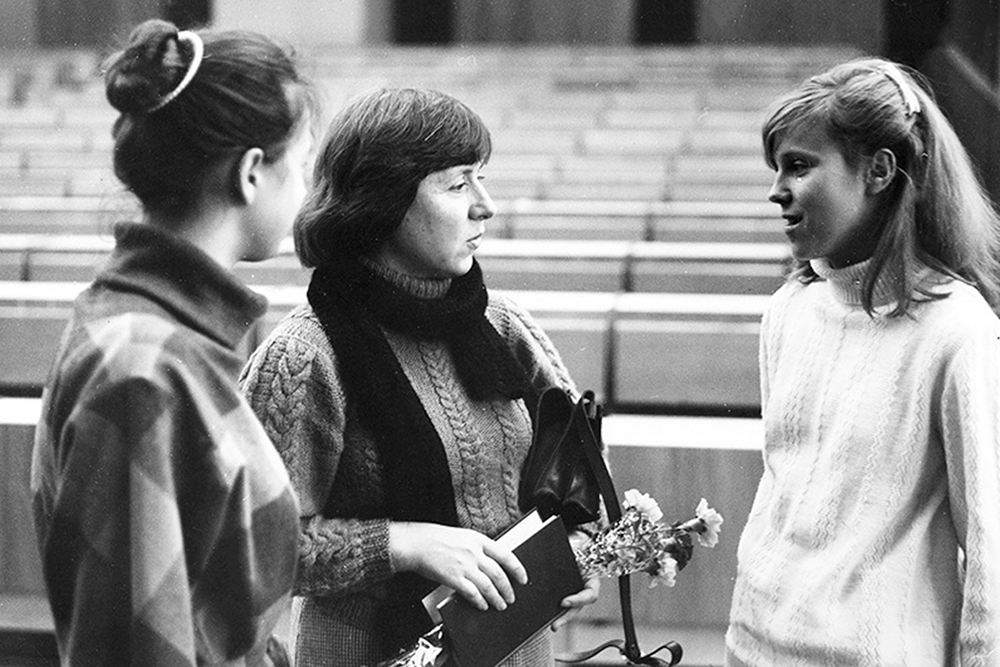 In Minsk, with readers, ca. 1988. Courtesy of Svetlana Alexievich.
INTERVIEWER
How so?
ALEXIEVICH
You’ll never reconstruct exactly what people said to you if you’re taking notes by hand. I didn’t have a recorder at the time—they were expensive—and in the end, I didn’t feel that the result was true to what I’d heard. I had lost the music, the rhythm animating those people. So I ended up disowning the piece. It’s one thing, let’s say, to compress a story from ninety-seven pages to ten—otherwise, a story that long might outweigh the others and destroy a book’s architecture. But I always start out with a precise transcript taken from a recording of someone’s voice. After I started working, when I was in journalism school, I wrote a long piece about women who never stopped waiting for their husbands to return from the war. I tried to remember their voices—I could hear them in my head. But they didn’t have the same electricity.
It became clear that a recorder was the only way. I borrowed the money from Adamovich and three other writer friends. The one I bought, which is now at the Nobel Prize Museum in Stockholm, was half the size of the other devices available at the time. I used it to redo my interviews with those women—their stories ended up in Unwomanly Face.
INTERVIEWER
Transcribing interviews must have been a big part of your life.
ALEXIEVICH
Later on, I got help with transcribing, which allowed me to record more and have more material to work with, but yes, at the start, I did it all myself. It’s awful work, but it was important, too, because when I did it, the voices would instantly rise up again in my head. Even now, when I’m sitting in front of a blank page, I will often listen to the recording again just to remember the what and the how, who it was, and my impressions of them.
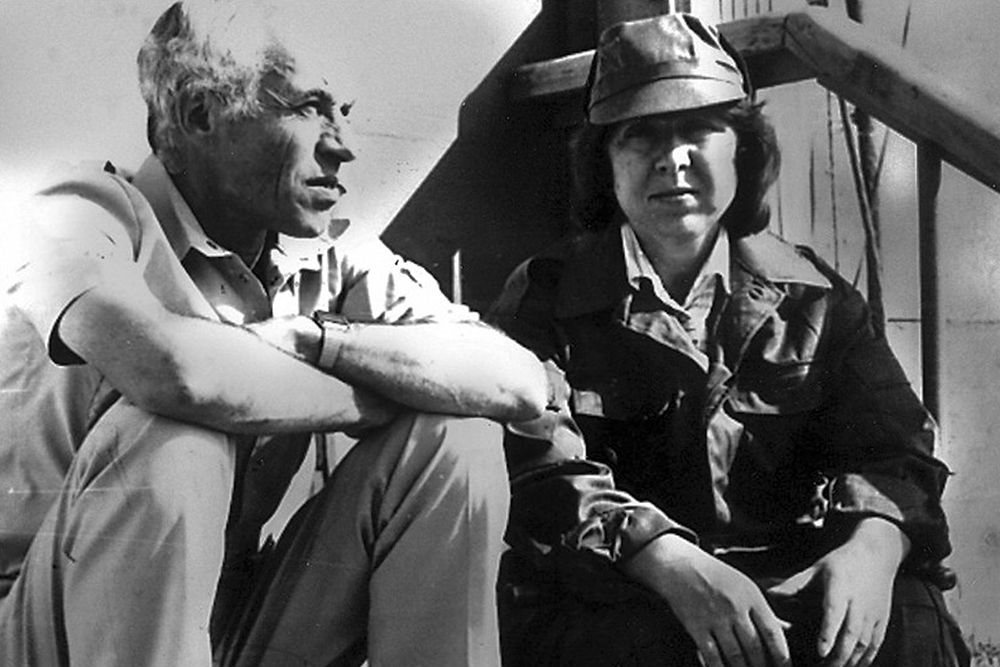
With a cameraman in Kabul, 1988. Courtesy of Svetlana Alexievich.
INTERVIEWER
How have you found people to interview?
ALEXIEVICH
Say I’m walking down the street and I hear a voice—sometimes a voice will have a certain magic. I’ll start following the person. It might be like that. Or I’m at someone’s house and I hear a story. I ask, “May I record this?” People who’d fought in the war would gather in Moscow every year for Victory Day. They’d come from all over the Soviet Union, the kinds of places I’d never have made it to. That’s where I could talk to them. And when I published excerpts of my books in newspapers, like in Komsomolskaia pravda (Komsomol pravda), I’d get mountains of letters from people who wanted to talk to me. That was a good newspaper back then—people loved it. The Komsomolskaia pravda of today has nothing to do with it.
INTERVIEWER
Have you always known you wanted to work with a chorus of voices?
ALEXIEVICH
Yes, I immediately understood that in order to truly capture a historical moment, I needed to write a history of feelings rather than of events, and that the narrative should be symphonic. You should have a high note and then a low one, or vice versa, or it should feel like a low note stretching out over time. It can’t be just one voice—the narrative needs to be multivocal. When I was considering how to do it, I thought about how, when you meet a stranger on a train and get to talking, your conversation doesn’t follow a continuity of time or action. Certain details and fragments come up unexpectedly. It’s the little details that interest us—I’m sure of this. Like the chocolate bar that a woman I met placed in the coffin of a young lieutenant. Before they lowered him into the ground, they let her through to put the chocolate bar in. Which meant everyone must have known she had loved him. Meanwhile, she’d thought it had been their secret.
INTERVIEWER
Was there a tradition of Soviet magazines publishing oral histories?
ALEXIEVICH
You can find things by Vladimir Gilyarovsky, or Maria Bochkareva, who was a soldier during World War One. Sofia Fedorchenko recorded fragments of her conversations with the wounded in hospitals. And then there’s my teacher, Adamovich. His book Out of the Fire [about the Nazi destruction of Belarusian villages] is brilliant. Take this one detail—the Germans are shooting people and burning their houses. One mother is so sure they won’t get out alive that she says to her son, “Why did you put on your rubber galoshes? Your legs are going to burn for a very long time.”
INTERVIEWER
How did you meet Adamovich?
ALEXIEVICH
My editor at Selskaia gazeta assigned me to interview him. I called him and asked. He said, “Okay. I’ll be walking past your editorial offices, I’ll stop in.” And he did! Usually, great writers are inaccessible, but we talked for three hours. The next day or the day after, I called to say I was done, and to ask how I should show him the interview. Again, he said, “I’ll stop by.” He started reading it and asked me, “Can I take this home?” Then he said, “Actually, you know what, I thought it was going to be the usual—that I’d have to rewrite it—but I didn’t touch a single word.” We started talking, meeting. It was an apprenticeship in thinking more broadly, like he did. He set my way of thinking, the way singers have their voices cultivated.
Adamovich told me he’d had the idea to write a book about women at war, but that he would never get around to it. The phrase “unwomanly face” came from a book of his that he’d dedicated to his mother. In the preface, he wrote, “The face of war is not a woman’s face.” That stuck with me. When I brought him my book—he was, of course, my first reader—he said, “I’m so glad I didn’t try writing this book. It would never have occurred to me to ask about many of these things, because I had no idea they were important to women.” That was a man who understood his own limitations.
INTERVIEWER
Are women’s voices different from men’s?
ALEXIEVICH
Of course. Undoubtedly. There are more colors in women’s voices, more sensuousness. It’s another world. That’s why people don’t have a full relationship with reality, why there is no harmony in our world, because there is no unity between the feminine and the masculine. The masculine dominates. Men are in charge, and old men to boot. They aren’t afraid to die, they’ve already experienced everything—love, their children are grown … They can let the world go to the dogs.
INTERVIEWER
My wife and I have a running argument. She says she wants a matriarchy, because women know more about life and death than men do. I don’t agree with her.
ALEXIEVICH
I might not agree with that either. Men have their strengths. Killing is also a kind of knowledge, even an art, which to me, as a woman, is never going to be fully accessible. I don’t think women kill just for the sake of it. But men can kill simply, and die simply, too. I remember, before our [2020] revolution in Belarus, I was in Moscow, and there was a brass band playing at the train station. I went to see what was happening, and it was these men going off to fight in Chechnya. Everybody so drunk and so happy. Imagine women heading off to war like that. Women are soldiers, too, of course—there are plenty of women in the Ukrainian army. But that makes sense—it’s their war, it is just. It’s for Ukraine. What cause is the Russian army fighting for?
INTERVIEWER
When I read Unwomanly Face for the first time, I was struck by the way society offered men legible frameworks for how to live with their wartime experiences—you’re a hero, you go around to schools, people wish you happy holidays. For a very long time, women who’d fought didn’t have anything like that.
ALEXIEVICH
Exactly. It’s as if they were never there. I still don’t understand why the government washed its hands of all these victors. Maybe it was those manly men who didn’t want to share their victory. And, naturally, men hated the women who’d fought. They’d leave them for women who hadn’t—the crepe de Chines, as they called them. “You smell like boots, she smells like perfume.”
INTERVIEWER
It’s remarkable that, with very few exceptions, you include the full names of your subjects in that book.
ALEXIEVICH
A half century had passed—they didn’t need to conceal their names anymore. With Boys in Zinc, things were different. I published an early excerpt in a newspaper, and one morning I got a call from one of the subjects, a senior lieutenant. He’d had an honest and powerful story. And here he was, asking, “Sveta, why did you use my last name?” I said, “You didn’t ask me not to …” “My father is opposed. They want to discharge me from the army. I was summoned by the KGB.” People didn’t want the truth about Afghanistan, and they still don’t. Just like how, today, people don’t want to know about Ukraine. My Belarusian subjects who live in Berlin fear for their relatives in Belarus. They could lose everything, including their apartments. No nation likes the truth about itself. That’s what I learned then. I realized that in these situations, like the ones I’m in now with the Belarusians, for instance, you have to either make composites of stories, or come up with other tricks.
INTERVIEWER
By “composites,” do you mean you sometimes put two people’s stories together?
ALEXIEVICH
Yes, so neither person can be identified. It’s still nonfiction, it reflects what people told me at the time. What’s important is the precision of the impressions, the feelings, the sense of the era. A conversation can flow in any direction, just as how, in a book, you might approach a story from one angle or another. I’ll place things wherever they feel the most powerful. I’m not interested in events per se—I’m interested in how people make sense of them. Of course, I want to pay the individual their due, but you can’t always do that. More often than not, I manage to erect only a common memorial.
INTERVIEWER
Was it because of the successes of The Unwomanly Face of War and Last Witnesses that you were able to go to Afghanistan?
ALEXIEVICH
Oh yes, I wouldn’t have been allowed to go there otherwise. After The Unwomanly Face of War, the Union of Soviet Writers took me abroad a few times, with one delegation or another—to Vietnam, for instance. There was this man from the KGB in the writers’ union—he must have been pretty high up, all things considered. He always smiled when he saw me. He had read Unwomanly Face and liked it. I asked for a meeting with him and he agreed to let me go to Afghanistan. So much in life happens because of personal affinity.
It was a rather strange trip from the start. I got on this huge military plane, and everybody on it was drunk. Most of the plane was filled with chained-down equipment. We sat up against the walls. When we started circling over Kabul, they tried to shoot us down with missiles. The soldiers began to wake one another. “Get up, or you’ll sleep through the kingdom of heaven.” I looked behind us and saw that the other half of the plane was filled with busts of Marx and Lenin, and red flags. That was us bringing them socialism.
I was in Afghanistan for twenty or thirty days. I think there were five of us writers, and I was the only woman. I didn’t quite get along with the others—they were there to shoot guns, they wanted masculine pleasures. I wanted to talk to people one on one, and without all that drinking. The commissar said to me, “Write something like The Unwomanly Face of War, but about our boys.” Out of ignorance—I don’t know how I could have been so naive—I said, “But this isn’t the same kind of war.” The way his eyes flashed! And the very next day, I had a colonel following me around, keeping an eye on what I was talking about and who I was talking to.
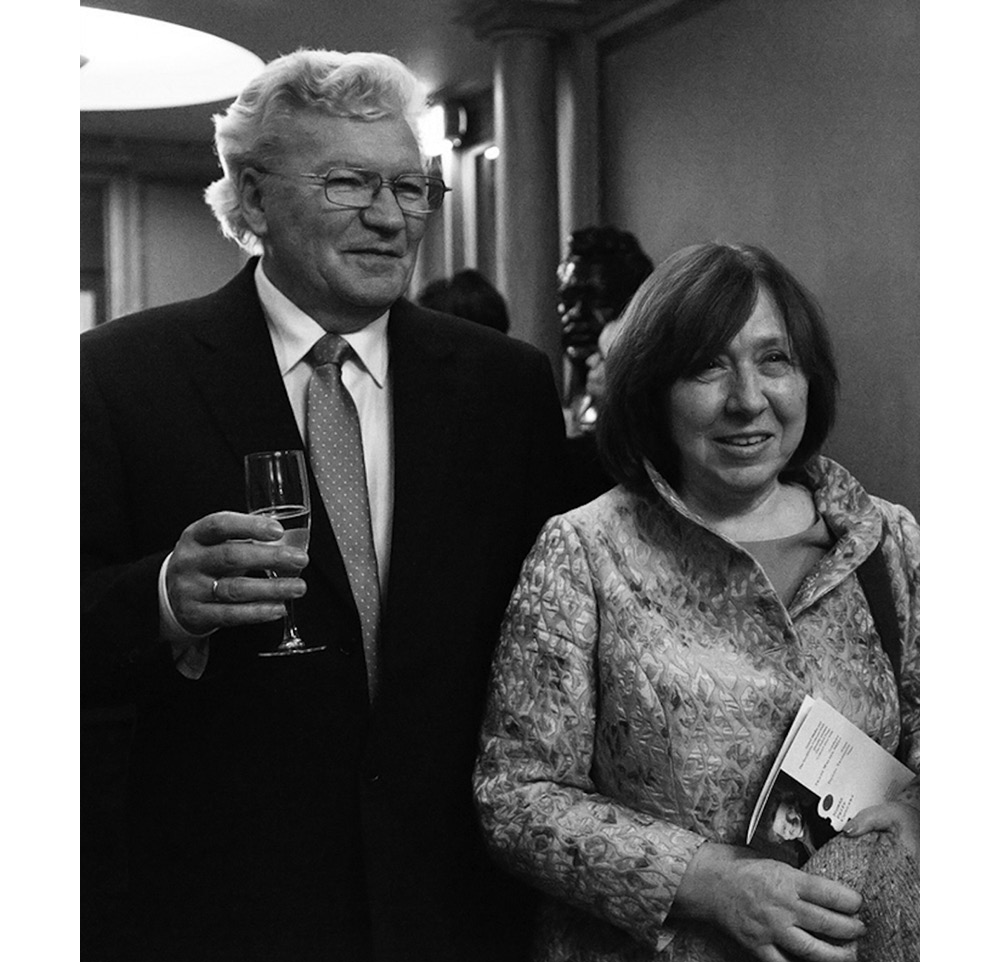
With her book publisher, Boris Pasternak, at the 2015 Nobel Prize Concert in Stockholm. © Margarita Kabakova, courtesy of Svetlana Alexievich.
INTERVIEWER
What did you do about him?
ALEXIEVICH
You know, I have yet to meet a Russian person who does their job to the letter. That’s how we survive, by bending the rules. I’d wait until he got drunk or went off on his own business. The boys themselves warned me several times not to say certain things around him or anyone else from the top brass. “You won’t make it home. It’s no problem around here—they’ll say it was a stray bullet.” It wasn’t just me. The soldiers had their own scores to settle, they had dedovshchina. From time to time, you might have found someone in a boiler room, hanged or strangled to death.
INTERVIEWER
When I think of war, I picture this widening black funnel that everything keeps falling and falling into.
ALEXIEVICH
As Remarque said, when people first come back from war, everything is black with blood, and then it all fades to pink. I recorded interviews with those men at war, right next to death, and they told me how it really was. When they returned, they got brainwashed by veterans’ associations. Those were hard times, the nineties. They were promised refrigerators, TVs. I was introduced to one soldier’s mother, let’s call her Natasha, when she was completely out of her mind, sitting in her nine-square-meter room, shouting, “Write this down! Tell the whole truth!” A year later, I was back in the same room and she was knocking on her son’s coffin, calling out to him. “Tell me you’re in there, kiddo. The coffin’s so small, and you were two meters tall.” A year after that, we met in court. I asked her, “Natasha, darling, what are you doing here? You wanted me to tell the truth, and I did—about how before they took your son to fight, instead of teaching him how to shoot, they had him doing renovations on generals’ dachas.” And she told me, “I need my son to be a hero. You turned him into a murderer.” Sometimes I pray, Lord, give me the strength to love my subjects.
INTERVIEWER
How did you learn about that lawsuit?
ALEXIEVICH
I got a summons to come to a pretrial hearing. At first, they were trying to mediate the conflict, make everyone come to a settlement. The mothers believed they were standing up for their children. People found it difficult to part with this image of the soldier of 1945. Especially men—try taking that toy away from them. Before each session, hundreds of people would gather in front of the court building. People would shout at the mothers, “You’re betraying your children again!” And the mothers would answer, “She turned our sons into criminals.” They had expected me to write something else—the sort of writing they teach at journalism school. But it wasn’t their moment. If I tried doing a project like that today, I think people would be too afraid to speak to me at all.
INTERVIEWER
I once did a story in Zhanaozen, in western Kazakhstan. There was an oil workers’ strike that ended with the police shooting at them. I did as many interviews as I could, and three weeks later, Tanya Lokshina from Human Rights Watch also went there. When she came back, she said, “Lena, you went just in time, no one is willing to talk anymore.”
ALEXIEVICH
That’s how it was for me. I happened to be the right person in the right place at the right time, when people were in a state of shock. That’s been my goal with all these books—to catch people at that moment of shock, at the scene of a war or the explosion at Chernobyl. It was the same with the fall of the Soviet Union. For most people, it was completely incomprehensible, it all happened so quickly. I even saw it in my father, he had such a difficult time understanding the new era. Everyone was afraid to say the word capitalism—they all said “the market.” We’d been dreaming of socialism with a human face, that seemed acceptable to us. This ruthless capitalism came as a blow. And the way the country got sold off for parts—the people who built it were entirely disregarded. That was a big part of why no one came to the defense of the Communist Party. You start talking to people about it and everybody feels hurt. They’ve spent their whole lives working at a factory, and now that factory belongs to some entrepreneur. Before, you could go to an office and get a travel voucher, your needs were taken into consideration, but now—no money? Buzz off. People were really offended. These were the seeds of the Putin regime.
INTERVIEWER
And what about you? When the Soviet Union collapsed, what did you think about the transition to capitalism?
ALEXIEVICH
You know, everybody had an opinion. It doesn’t matter what I thought. My investigative spirit trumped my feelings anyway. I’m an observer of mass consciousness. But I hadn’t expected the Soviet Union to crumble so quickly. After all, how many party members were there, fifteen million? I thought they would put up some resistance. We were saved from a civil war by a new coffee grinder, a new washing machine, a new car, new things to eat.
I understood that this moment would pass. I had to make a book about the fall of the empire. I didn’t know what it needed to be, but I started with this—I was shocked by the number of suicides. Especially in Russia and in Belarus, a lot of people couldn’t comprehend what had happened, and so they killed themselves. I went to a hospital where every day they would bring in a new one. Still, suicide was never my subject. What I was trying to write was a history of utopia. Zacharovannye smertiu (Enchanted by death, 1993) came about only because my German publisher asked what I was working on. I let her see what I had, and she said, “But that’s a book.” After it was published and some time had passed, I was very unhappy with it. If I’d set out to write about suicides, it would have needed to be a different book—more metaphysical, more existential. Later, I threw the book out and then put some of the stories from it into Secondhand Time. That was how I’d conceived of them originally, as part of a book about how empires fall, how they crumble—because the Soviet Union is the only empire that’s fallen right before our eyes.
INTERVIEWER
What form does a book take in your mind as you’re working on it?
ALEXIEVICH
Someone once told me that temples are sites of ancient cosmic connection because of the way millions of people have worked up an energy inside them over time. A book is a similar thing. Naturally, you can’t capture everything, but the sharper your senses, the more you can hear and seek out. As I go, I sense approximately what’s supposed to be there, and then, when I start putting it together, I end up with architectural insights. I know a book is basically finished when my idea is exhausted. You can keep reiterating it, but there’s no point, nothing new there. When you read my books, did the tension ever let up? Were you ever bored?
INTERVIEWER
Not bored. In Secondhand Time, there’s a bit of a lull here and there, but it’s such a big book that there need to be pauses. That’s your longest one, right?
ALEXIEVICH
They’re all one book, the five of them—successive volumes. The narrative is ongoing.
INTERVIEWER
Has anything changed in your writing style?
ALEXIEVICH
No, it’s still the same genre, the same foundation. Conversations. I want to see it through, the story of Soviet civilization. There needs to be a book about Ukraine, about the Belarusian revolution. About why it’s frightening to be alive. About how Russians go kill Ukrainians for money.
How can I comprehend this in its entirety, capture it in a book? I don’t know—I can’t see the whole picture yet. These days, I’m interested in more existential things—duty, death, old age. People are living longer now—someone who’s eighty-six or eighty-nine is not so special these days, but once upon a time, eighty was like a celestial limit. We need a philosophy for this stage of life.
INTERVIEWER
And your book about love? Are you still working on it?
ALEXIEVICH
I’ve interviewed three hundred people for it. Some may say, “Oh, how wonderful that you’re not writing about war again! A book about love will be so joyful!” But love is also a war, one with yourself or with many other people. It’s not such a simple thing either. One woman told me, “I don’t even know what love is. What is it?” And this was a married woman with two children. So I keep approaching it and then taking breaks. And my papers are back at my apartment in Minsk, and at my dacha. Nothing to be done about that.
INTERVIEWER
Why did you leave Minsk?
ALEXIEVICH
The Belarusian revolution. It was probably the most beautiful revolution—so idealistic. The women came out on the streets in white dresses carrying flowers. I was on the Coordination Council [for ensuring the democratic transfer of power in Belarus]. There were seven members, and everybody but me was arrested. In fact, the people rose up on their own, without any help from us—we didn’t come in until the tail end of it. Personally, I was afraid of the bloodshed. I didn’t want all those kids to get killed. I saw photographs of people who’d been beaten up so badly that all that was left of them were hunks of meat. I was surprised they found people who were capable of being that violent toward the protesters on the very first day. I ended up having diplomats and their wives taking turns spending the day or the night at my house. There were black vans circling the streets, parked outside my building. When I started getting phone calls from unknown people, it became clear I had no choice but to leave. The German ambassador helped me get out.
I’ll never forget when the doorman called me from downstairs, reassuring me, “Svetlana, I’ll take you out through the garage.” The cleaner called me—“Don’t come out! There are strangers by the elevators. They’re probably waiting for you.” In dark times, there are good people, too—we’d never suspect how many of them there really are. Sometimes it’s hard to think back on that time without crying.
INTERVIEWER
Was your writing routine different at home than it is now?
ALEXIEVICH
I haven’t changed, I’m the same person. But I didn’t get back to work as soon as I got here. I have been spending more time thinking than writing, especially since so much depends on this nerve pain of mine. I’m trying to make sense of everything that has happened these past ten years. For example, how, when the revolution was being suppressed, more men than women were raped. At the slightest offense, it would be “Shove a stick up his ass, shut him up.” At an anti-war protest in Moscow, a poet named Artyom Kamardin, who’d been reciting anti-war poems, was raped with a dumbbell. I’ve heard of a police chief demanding that his precinct always have a champagne bottle ready. With women, it’s one thing—they’ve always done this to women. But with men, never so much. So why now? Where does the hatred come from in people? It’s an interesting subject—and it’s your subject, too. “I’m off to kick khokhol ass,” one man said to me. A young man. What did the khokhols ever do to you? Nothing. You just hate them. Why?
INTERVIEWER
Lev Rubinstein had this idea about hatred—that it comes first, and that its object is secondary. You get infected, and then you decide how to use it, on whom.
ALEXIEVICH
But why do you get infected in the first place? Why hurt someone because they have a differently shaped nose or they don’t sleep with the right person? It’s a mystery to me. Why does this suddenly flare up in people?
Take my friend M. She was in the Donetsk People’s Republic and the Luhansk People’s Republic, leading negotiations for an exchange of wounded soldiers, prisoners of war. She told me, “You sit there and you can feel it—the people on this side are criminals and the people on that side are criminals, too. They’ve tasted blood and you just have to adjust to it, because they have already forgotten normal language.” [The phone rings, Alexievich picks up.] Oh, and here’s M. now!
Hello, hi! I’m with Lena, we were just talking about you … Do you remember when you told me about going to Donetsk? You said, “I could feel it in my bones. The people on this side were criminals and the people on that side were criminals, too”? … What? … “They’re criminals, because they have tasted blood, that’s what the war has done to them.” … Yes, you told me that, but you’ve already forgotten … Oh well, we’ll talk later. Lena and I will finish our session a little earlier today. [Ends call.]
Do you see how everything disappears? She’s already forgotten.
Translated from the Russian by Bela Shayevich
The Russian-language version of this interview can be found at Meduza, the world’s largest independent Russian media outlet.


Comments
Post a Comment